Haptic interaction
Frames lack a discreet feedback channel for confirmation, navigation and silent notifications.
Sonic Pixel for Smart Glasses
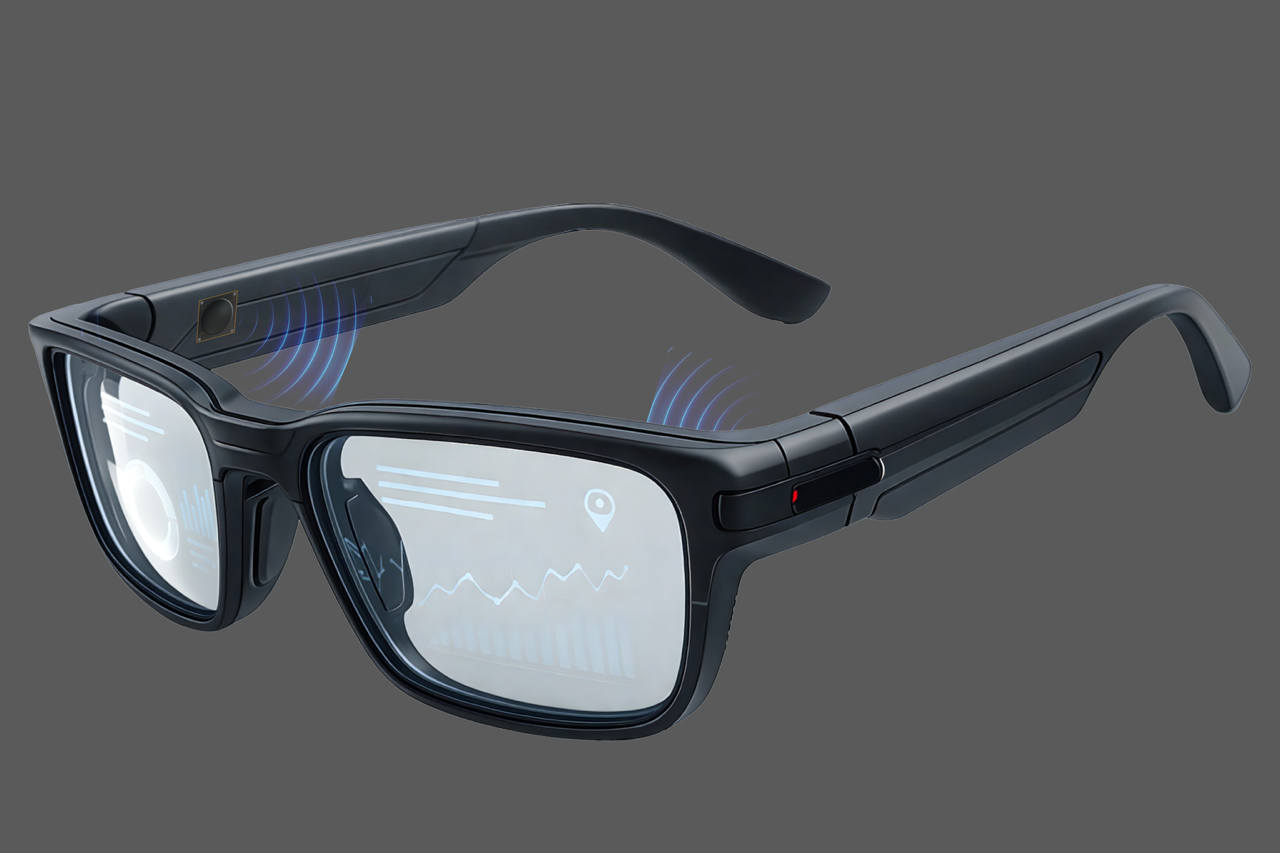
Acciosonic puts one AlScN pMUT phased-array chip at the temple. It delivers subtle haptic feedback, directed private audio and near-field physiological sensing from one CMOS-compatible component.

Challenge
Visual and audio feedback are already overused. Next-generation frames need interaction that is subtle, private and always available without adding separate motors, speakers, sensors or another wearable.
Frames lack a discreet feedback channel for confirmation, navigation and silent notifications.
Open-ear speaker integration remains constrained, and privacy cannot be ensured in public spaces.
Basic physiological signals are absent from the frame, forcing users to rely on separate wearables.
Solution
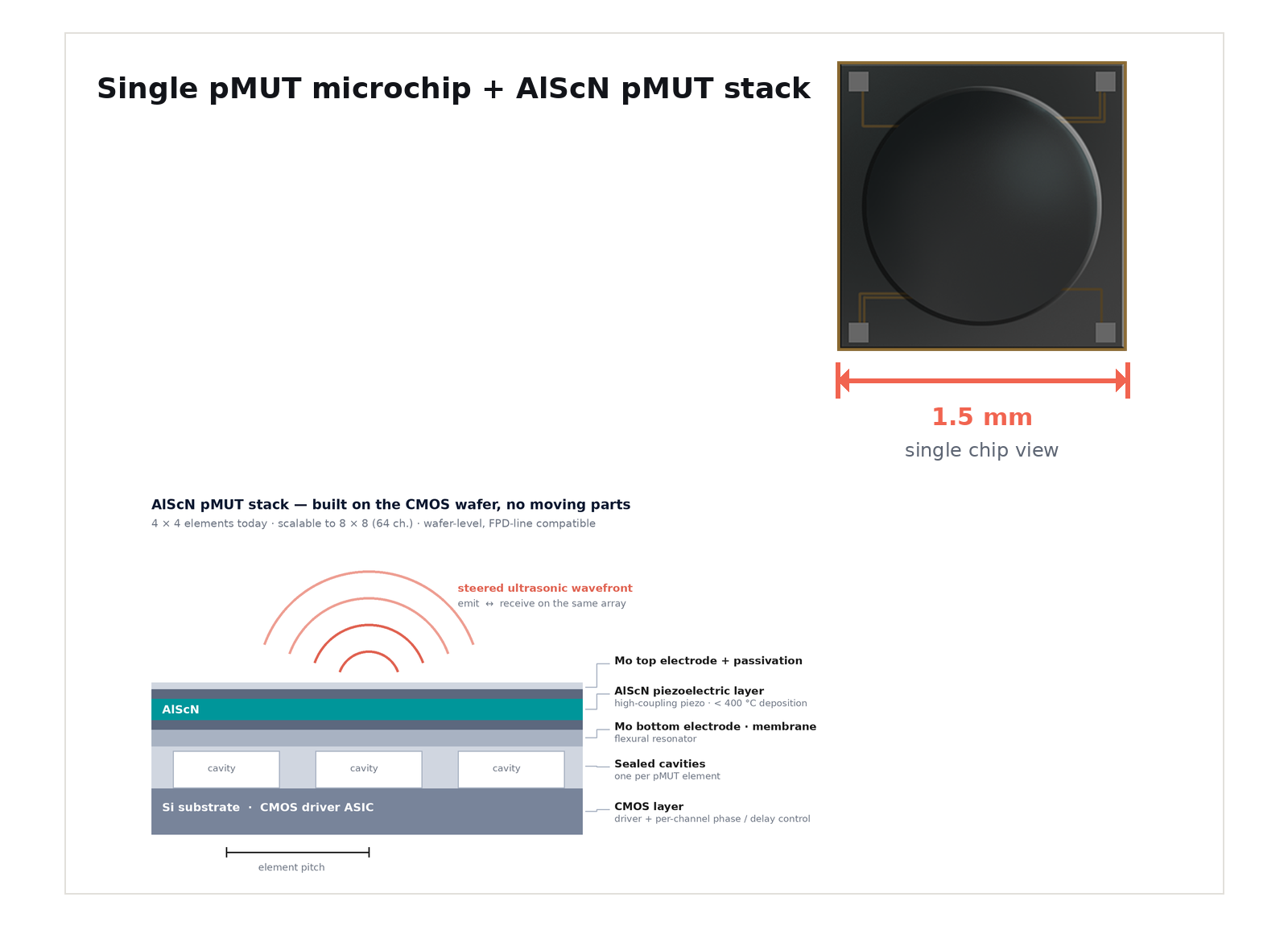
The same pMUT array switches between three operating modes: it generates focused ultrasonic pressure, receives near-field pulse-echo signals and steers a private audio carrier toward the ear.
Silent haptic feedback delivered at the temple, such as subtle confirmations and directional cues.
Directed private audio for prompts or messages without earbuds and without leakage to bystanders.
Near-field physiological sensing for pulse, heart rate and SpO₂ through temple skin contact.
In the frame
Sonic Pixel sits in the frame at the temple. From that single location, the array can create tactile cues, sense near-field physiological signals and steer audio toward the ear canal.
Product proof
The Sonic Pixel is designed as a compact, CMOS-compatible microchip platform for OEM integration, licensing and process know-how transfer.
OEM licensing
Acciosonic works with hardware partners on reference designs, integration studies and production pathways for Sonic Pixel frames.
Start a conversationGet in touch
For OEM integration, reference designs or licensing discussions, contact the team directly.